12 AFRICAN STARTUPS AND TECH COMPANIES THAT CUT WORKFORCE IN 2025
In 2025, African tech startups faced major workforce reductions as companies like Vendease, MAX, Twiga Foods, and Flutterwave cut jobs amid funding pressures and operational challenges. This article highlights 12 key startups and examines the impact on Nigeria, Kenya, and South Africa’s tech ecosystem.
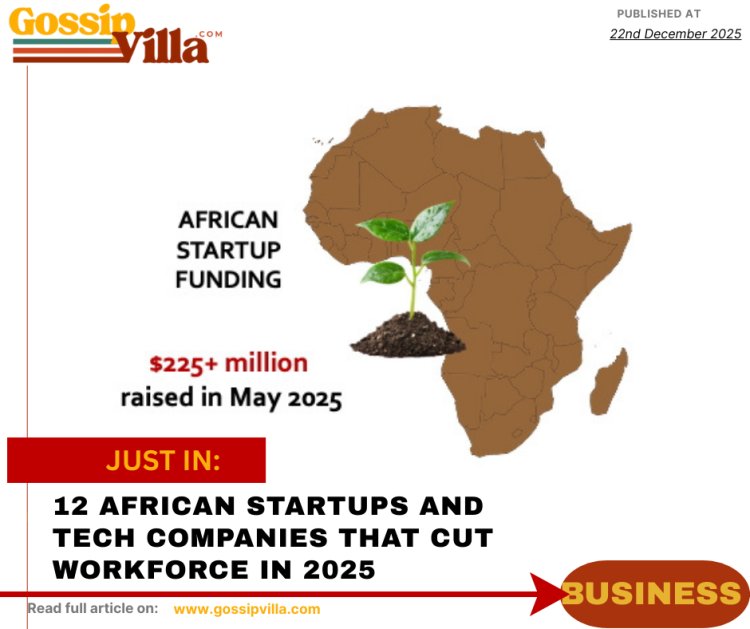
The African tech ecosystem has experienced a turbulent year in 2025, as several startups and established firms across the continent announced significant workforce reductions. From Nigeria to Kenya and South Africa, these layoffs reflect the combined impact of tighter funding conditions, rising operational costs, and the need for companies to focus on sustainable and profitable business models. While Africa’s technology sector continues to grow, 2025 has highlighted the challenges companies face in balancing rapid expansion with financial resilience.

In Nigeria, several high-profile startups were affected by workforce reductions this year. Metro Africa Xpress (MAX), a mobility financing startup, laid off approximately 150 employees—about 30% of its workforce—as part of a strategic restructuring to refocus operations on core services and extend the company’s runway amid capital constraints. Similarly, Vendease, a food procurement platform, cut 120 roles, representing around 44% of its staff, as it sought to streamline costs and push toward profitability amid economic headwinds like currency depreciation and inflation. These job cuts were part of a broader trend across African tech companies reevaluating their cost structures and prioritizing sustainable growth. According to TechCabal, these reductions are reflective of tighter funding environments across the continent.
Another Nigerian venture impacted was Bento, which dismissed its entire technology team of roughly ten employees following internal disputes over pay and leadership instability. Sabi, a B2B marketplace serving merchants and resellers, also reduced about 20% of its workforce as it pivoted to focus more on commodity-based services. These measures reflect the need for Nigerian startups to identify profitable niches and optimize resources amid changing market dynamics. MEXC reports that such layoffs are indicative of the increasing emphasis on operational efficiency and strategic focus in early-stage African startups.
Kenyan startups were also affected. eBee Africa, a mobility tech firm, issued redundancy notices affecting much of its staff due to declining revenues. Twiga Foods, one of the region’s most funded agritech ventures, laid off more than 300 jobs as part of a restructuring that consolidated recent acquisitions and aimed to streamline operations under a new holding entity. Tala, a Kenyan mobile lending platform, also implemented layoffs for some staff, reflecting the impact of tighter credit conditions and the need to manage operational risk.
In South Africa, 54 Collective, a venture firm and startup studio, shut down parts of its operations after the end of a major partnership, resulting in job cuts. Global tech companies such as Meta also implemented workforce reductions in their African divisions as part of wider global cost-cutting measures, highlighting how multinational companies are adjusting their regional operations.
Other notable firms reducing headcount include Flutterwave, which trimmed a significant portion of its workforce across Nigeria, Kenya, and South Africa to align expenses with revenue targets and investor expectations. Businessfront, a Nigerian tech media publisher, also cut staff to concentrate on strategic areas and content priorities. Jumia, Africa’s largest e-commerce platform, reduced about 7% of its workforce in late 2025 as part of operational efficiency measures.
The layoffs across African tech companies in 2025 were driven by multiple factors. Global venture capital markets have tightened considerably, with investors prioritizing startups that demonstrate clear paths to profitability. Rising operational costs, inflation, and currency volatility have also put pressure on budgets, forcing leadership teams to make difficult decisions about workforce size. At the same time, companies are focusing on revenue-generating products and sustainable growth to ensure long-term stability.
While these reductions have affected thousands of employees, they also indicate a maturing tech ecosystem that is learning to adapt to shifting investor expectations and economic conditions. Many companies are refining their product focus, improving customer monetization, and optimizing internal processes to strengthen financial sustainability. The workforce adjustments also provide insight into the broader African tech labor market, offering opportunities for skilled professionals to join emerging startups, participate in innovation hubs, or pursue remote and freelance roles with global firms.
As African startups and tech companies navigate the post-layoff environment, 2025 is emerging as a year of realignment and strategic recalibration. The layoffs underscore the importance of resilience, adaptability, and operational efficiency. Companies are increasingly aware of the balance between growth and sustainability, and founders are prioritizing financial prudence alongside innovation. These lessons will shape the trajectory of African startups, guiding them toward smarter growth strategies and stronger contributions to the continent’s technology-driven future.
READ MORE ON HOW PayPal Eyes a Comeback in Africa After Years of Limited Access and Lost Trust
In conclusion, the workforce reductions at Nigerian, Kenyan, and South African tech companies in 2025 highlight both the pressures and opportunities within the African tech ecosystem. While layoffs have disrupted numerous careers, they also mark a period of transition toward more sustainable business practices. Companies are learning to navigate a competitive landscape while focusing on efficiency, profitability, and strategic growth. The experiences of 2025 will serve as important lessons for startups, investors, and employees as Africa’s digital economy continues to evolve.
What's Your Reaction?