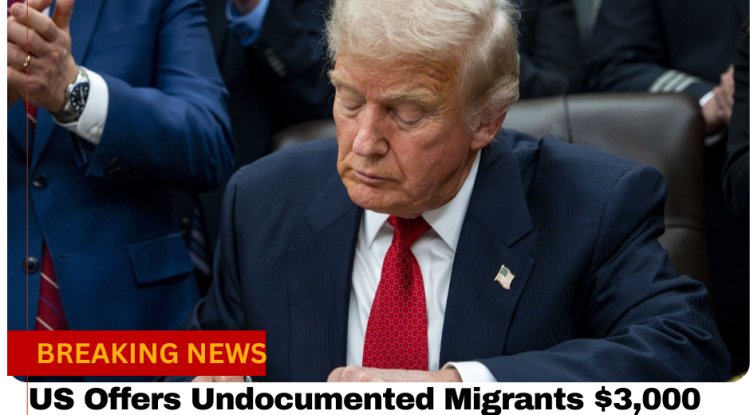
US Offers Undocumented Migrants $3,000 stipend and Free Flights to Return Home
The U.S. Department of Homeland Security is offering undocumented immigrants a $3,000 cash stipend, free one-way flights, and waived fines to voluntarily self-deport by December 31, 2025, via the CBP Home app.

US Offers Undocumented Migrants $3,000 stipend and Free Flights to Return Home
Voluntary Deportation
In a bold escalation of its immigration enforcement strategy, the U.S. Department of Homeland Security (DHS) has announced a significant incentive program for undocumented immigrants to leave the country voluntarily. As of December 22, 2025, eligible individuals who register through the CBP Home app and depart by December 31, 2025, can receive a $3,000 cash stipend (triple the previous $1,000 amount), along with free airfare to their home countries and forgiveness of certain civil fines associated with unlawful presence.
This “holiday stipend” initiative, framed by DHS as a generous “exit bonus,” is part of the broader Project Homecoming, launched earlier in 2025 under President Donald Trump’s second term. The program aims to encourage self-deportation as a cost-effective and humane alternative to forced removals, which DHS estimates cost taxpayers an average of $17,121 per person when including arrest, detention, and deportation expenses. By contrast, voluntary departures through the app reportedly reduce these costs by around 70%. (DHS)
The Program’s Origins and Evolution
Project Homecoming was established in May 2025 via a presidential proclamation, directing DHS and other agencies to create streamlined processes for voluntary departures. The program repurposed the CBP Home mobile app (originally developed under the previous administration for border-related scheduling) into a tool for self-deportation. Users download the app, submit their intent to leave, provide personal details, and receive government-arranged travel assistance.
Initially, participants received a $1,000 stipend upon confirmed return, plus free flights and support for travel documents. The program also deprioritizes eligible individuals for ICE enforcement actions, allowing them time to organize their affairs without immediate detention risk. DHS reports that since January 2025, approximately 1.9 million undocumented immigrants have voluntarily left the U.S., with tens of thousands utilizing the CBP Home program.
According to Reuters, The recent tripling of the stipend to $3,000 is a temporary measure tied to the Christmas season, intended to accelerate departures before the end of the year. Homeland Security Secretary Kristi Noem emphasized the urgency: “Illegal aliens should take advantage of this gift and self-deport because if they don’t, we will find them, we will arrest them, and they will never return.” She highlighted the program’s success in reducing enforcement burdens and restoring resources for American citizens.
How the Incentive Works
To participate, individuals must:
• Download the CBP Home app and register their intent to depart.
• Provide accurate information and respond to outreach from DHS representatives.
• Complete their departure by December 31, 2025.
• Verify their return via the app to receive the $3,000 stipend (paid after confirmation).
The program covers one-way flights, potentially including family members, and waives fines for failure to depart. Voluntary departure preserves better future immigration options compared to forced removal, which can result in permanent bars from re-entry. DHS stresses that participation is strictly voluntary, though it operates alongside broader enforcement efforts, including expanded ICE operations and plans for more detention facilities in 2026.

Broader Context and Reactions
This incentive is one element of the Trump administration’s aggressive immigration agenda, which includes promises of mass deportations (targeting up to 1 million annually) and the revocation of temporary protections for groups like Haitians, Venezuelans, and others. The policy has sparked intense debate.
Supporters argue that the program offers a dignified exit option, saves taxpayer money, and aligns with efforts to prioritize American resources. Critics, including immigrant advocacy groups, question its ethics, calling it coercive amid heightened enforcement fears. Reports from earlier in 2025 indicate some participants (particularly those in detention) felt pressured or misled about the stipends, with complaints of delayed or missing payments. While these cases appear isolated, they highlight implementation challenges.
The program also extends to specific groups, such as unaccompanied migrant teenagers offered $2,500 stipends in October 2025, raising concerns about vulnerabilities.
READ MORE ON : President Bola Tinubu Arrives in Lagos for End-of-Year Holidays
Implications for Undocumented Immigrants
For many undocumented individuals, the decision is complex. The $3,000 stipend and free flight provide immediate financial relief, especially during the holidays, and avoid the trauma of detention. However, returning home may mean facing economic hardship, violence, or instability in countries of origin. Voluntary departure allows potential future legal re-entry, unlike formal deportation.
DHS encourages eligible migrants to act before the deadline, warning that non-participants risk arrest and permanent bans. As enforcement ramps up in 2026, this temporary incentive represents a final “carrot” in a strategy heavy on sticks.
The U.S. immigration landscape remains highly polarized. While voluntary programs like this may achieve some deportations without costly operations, they underscore the ongoing tension between enforcement and humanitarian considerations. As the year ends, the $3,000 offer marks a pivotal moment in the administration’s push to reshape America’s borders.
What's Your Reaction?