US LAWMAKERS PUSH TO BAN CHINESE TECH FIRMS INCLUDING XIAOMI AND DEEPSEEK
US lawmakers urge the Pentagon to flag Xiaomi and DeepSeek as military-linked tech firms, highlighting global tech-security tensions and potential impacts on Nigeria’s technology market.
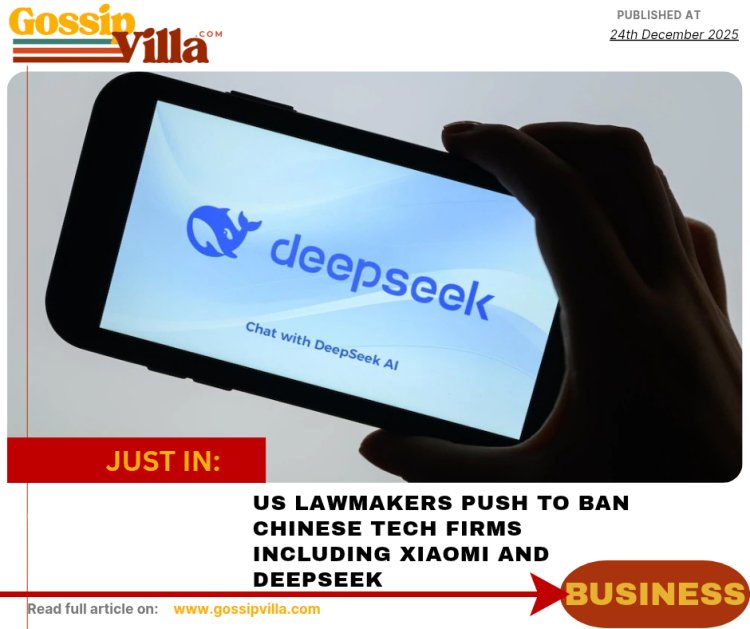
A group of senior U.S. lawmakers has sent a formal letter to the Pentagon, urging the addition of several Chinese technology companies, including Xiaomi and DeepSeek, to a list of entities believed to have ties to the Chinese military. The initiative reflects growing concerns over technology supply chains and national security risks, highlighting the intersection of global business and geopolitical tensions. Lawmakers argue that these companies could potentially provide sensitive technology or data to military operations, making oversight crucial.
Infobae reports that while inclusion on the Pentagon’s list does not automatically trigger sanctions, it serves as a strong warning to investors, suppliers, and governments about the potential security vulnerabilities these firms may represent. The letter specifically emphasizes the importance of monitoring emerging technology sectors, including artificial intelligence, robotics, and telecommunications, where Chinese companies have rapidly expanded their influence. Analysts note that these measures are part of a broader effort by the United States to mitigate reliance on foreign technology that could be leveraged for strategic military advantage.
Among the companies named, DeepSeek is recognized for its rapid advancements in artificial intelligence, particularly in machine learning and data analytics applications. Xiaomi, on the other hand, is a global leader in consumer electronics and smartphones, with a significant market presence in Asia, Europe, and Africa. Lawmakers’ concerns focus on the possibility that products, software, or infrastructure from these firms could be repurposed or exploited to access sensitive information or critical systems. This reflects an increasing trend in which governments worldwide are closely evaluating the security implications of foreign technology in both civilian and defense contexts.
The lawmakers’ letter also underscores the complexity of balancing international trade, technological innovation, and national security. Chinese companies like Xiaomi and DeepSeek argue that they operate independently of military programs, offering products and services exclusively for civilian use. Yahoo News Malaysia notes that Xiaomi publicly rejected claims of military affiliation, stating that it remains a consumer technology company with no involvement in defense operations. This public denial highlights the challenges of addressing perceived security risks while maintaining open commercial markets and international partnerships.
For African markets, particularly Nigeria, the developments carry significant implications. Chinese hardware and software dominate the mobile and AI technology space across the continent, with millions of devices in active use. Any formal restrictions or sanctions on firms like Xiaomi could lead to disruptions in device availability, increased prices, and potential delays in technological adoption. Local tech companies that rely on Chinese products for infrastructure, cloud services, or AI integration may also need to reassess supply chains and consider alternative sources to maintain operational continuity.
Experts suggest that the debate over Chinese technology may accelerate local regulatory measures aimed at data protection and national security. Nigerian authorities and businesses might increase scrutiny of imported technology, enforce stricter compliance requirements, and encourage domestic innovation to reduce reliance on foreign hardware and software. This situation illustrates how global policy decisions can have direct consequences on regional tech ecosystems, influencing both consumer access and enterprise adoption.
The focus on AI companies like DeepSeek also points to broader concerns about the role of emerging technologies in global security. Governments are increasingly aware that AI models, data analytics platforms, and machine learning tools can be dual-use, serving both civilian applications and strategic objectives. Oversight mechanisms and risk assessments are becoming central to policy discussions, especially as AI becomes integrated into critical infrastructure and national security operations.
This push by U.S. lawmakers is part of a wider pattern of technological and economic measures targeting Chinese companies. Similar initiatives have addressed telecommunications, cloud computing, and hardware manufacturing, with the goal of ensuring that key technologies remain under scrutiny to prevent misuse. For companies operating internationally, this creates a landscape of increasing compliance requirements, political sensitivities, and potential market uncertainties.
For Nigerian consumers, tech enthusiasts, and businesses, understanding these developments is crucial. The potential restrictions on Chinese tech firms could affect smartphone pricing, availability of AI-driven applications, and investment in local tech startups that rely on Chinese devices. Industry analysts note that the situation could also encourage diversification, with African markets exploring alternative suppliers from Europe, the U.S., and other regions to reduce dependency on a single source.
The debate also emphasizes the interplay between technology and geopolitics. Decisions made in Washington or Beijing can ripple across continents, influencing commercial, regulatory, and social aspects of technology usage in far-reaching markets. The current focus on Xiaomi and DeepSeek illustrates the growing awareness that technology companies are not just commercial entities but also actors in global strategic considerations.
READ MORE ON HOW OPay Users Struggle as Global Tech Glitch Disrupts Apps Nationwide
In conclusion, the lawmakers’ effort to flag Chinese tech companies for their alleged military connections highlights a critical intersection of national security, technological advancement, and global commerce. For Nigeria and other African nations, these developments serve as a reminder of the influence that international policy decisions can have on local technology adoption, market dynamics, and regulatory approaches. The ongoing scrutiny of firms like Xiaomi and DeepSeek underscores the need for vigilance, preparedness, and strategic planning to ensure that technology markets remain resilient, secure, and responsive to evolving global trends.
What's Your Reaction?