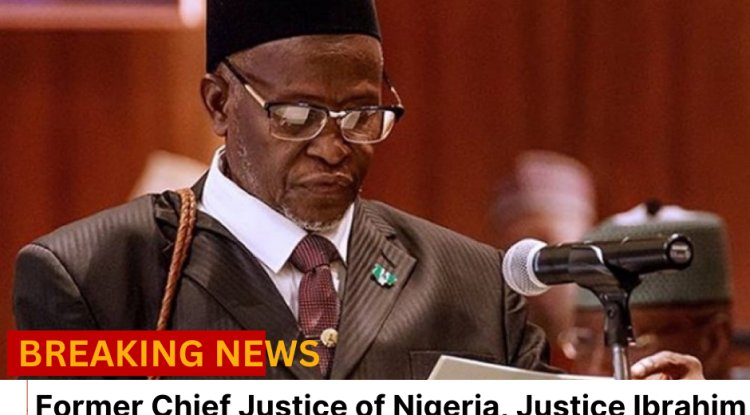
Former Chief Justice of Nigeria, Justice Ibrahim Tanko Muhammad, Passes Away at 71
Former Chief Justice of Nigeria, Justice Ibrahim Tanko Muhammad, has passed away at age 71 in a Saudi Arabian hospital after a prolonged illness. The distinguished jurist, who served as CJN from 2019 to 2022, leaves behind a legacy of dedication to justice and the rule of law. Tributes pour in from the judiciary and nation.
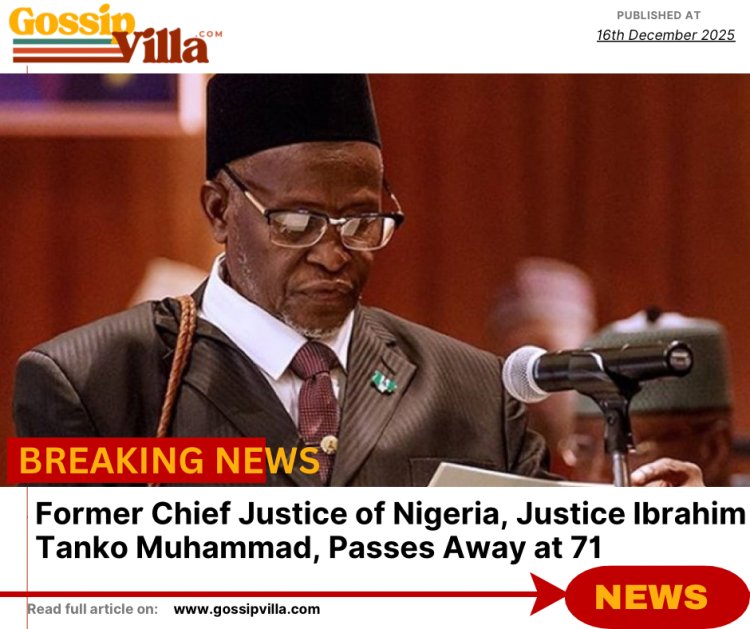
Former Chief Justice of Nigeria, Justice Ibrahim Tanko Muhammad, Passes Away at 71
Nigeria’s legal community and the nation at large are mourning the sudden passing of Honourable Justice Ibrahim Tanko Muhammad, GCON, the former Chief Justice of Nigeria (CJN). The distinguished jurist died on Tuesday, December 16, 2025, in a hospital in Saudi Arabia, where he had been receiving treatment following a prolonged illness. He was 71 years old, just two weeks shy of his 72nd birthday on December 31.
The news of his demise was confirmed by multiple authoritative sources, including the Bauchi State Government, the National Judicial Council (NJC), the Supreme Court of Nigeria, and various legal associations. Bauchi State Governor Bala Mohammed described the late Justice Muhammad as “a venerable jurist whose life and career exemplified dedication to duty, integrity in service, and steadfast commitment to the rule of law.” The current Chief Justice of Nigeria, Justice Kudirat Kekere-Ekun, also expressed profound sorrow, highlighting his legacy of hard work, honesty, and dedication to justice.
Justice Ibrahim Tanko Muhammad’s death marks the end of an era for Nigeria’s judiciary. As the 17th Chief Justice of Nigeria, he left an indelible mark through decades of service, rising from humble beginnings to the pinnacle of the nation’s legal system. (Punch News)
Early Life and Education
Born on December 31, 1953, in Doguwa-Giade Local Government Area of Bauchi State, Justice Muhammad grew up in a region known for its rich cultural heritage in northern Nigeria. He pursued his education with diligence, earning a Bachelor of Laws (LL.B) degree from Ahmadu Bello University (ABU) in Zaria. He was called to the Nigerian Bar in 1981 after completing studies at the Nigerian Law School.
Furthering his academic pursuits, he obtained a Master of Laws (LL.M) in 1985 and a Ph.D. in Law in 1998, both from ABU. His scholarly achievements underscored his commitment to legal excellence, blending common law principles with an understanding of Islamic jurisprudence, which would later influence his judicial philosophy.
Judicial Career: A Steady Ascent
Justice Muhammad’s judicial journey began in earnest in 1982 when he started practicing law. His integrity and competence quickly caught the attention of authorities. In 1989, he was appointed Chief Magistrate of the High Court of the Federal Capital Territory (FCT), a role he held until 1991.
That year, he was elevated to the Bauchi State Sharia Court of Appeal as a Judge (Kadi). His expertise in Sharia law proved invaluable, and in 1993, he was appointed Acting Chief Judge of the Bauchi State Sharia Court of Appeal before being confirmed substantively.
His rise continued unabated. In 2002, he became a Justice of the Court of Appeal, serving in various divisions. On January 8, 2007, he was sworn in as a Justice of the Supreme Court of Nigeria, one of the highest honors in the judiciary.
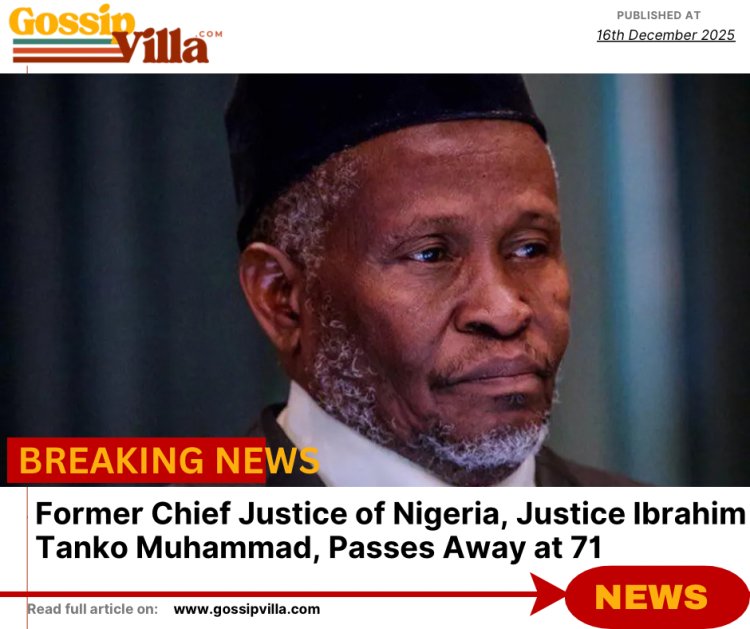
Tenure as Chief Justice of Nigeria
Justice Muhammad’s most prominent role came in 2019. Following the controversial suspension and subsequent resignation of his predecessor, Justice Walter Onnoghen, he was appointed Acting Chief Justice on January 25, 2019. He was confirmed as the substantive CJN on July 24, 2019, by the Senate, becoming Nigeria’s 17th Chief Justice.
During his tenure from 2019 to 2022, Justice Muhammad navigated complex challenges. He emphasized judicial independence, the rule of law, and anti-corruption efforts within the judiciary. He pledged commitment to fighting corruption and worked on reforms to enhance efficiency in the courts.
However, his time as CJN was not without controversy. In June 2022, 14 justices of the Supreme Court issued a public protest letter alleging poor welfare, inadequate funding, and administrative lapses under his leadership. The memo described the situation as the “peak of degeneration” in the court. Shortly after, on June 27, 2022, Justice Muhammad resigned, citing ill health as the primary reason.
Despite the contentious exit, his contributions were recognized posthumously in tributes. After resignation, he was honored with the Grand Commander of the Order of the Niger (GCON), one of Nigeria’s highest national awards.
Legacy and Tributes
Justice Muhammad is remembered as a devout Muslim, a courageous jurist, and a mentor to many, particularly young Muslim law students. The Nigerian Association of Muslim Law Students (NAMLAS) described him as a “fatherly pillar” and a source of encouragement, calling his passing a “monumental loss” to the judiciary and the nation.
The Supreme Court, in its statement, noted his “unwavering commitment to the rule of law, judicial independence, and the fair administration of justice.” Governor Bala Mohammed praised him as an “illustrious son of Bauchi” who exemplified patriotism and devotion to justice.
His career spanned over four decades, during which he contributed to landmark decisions and the development of Nigeria’s legal framework. Colleagues highlight his humility, discipline, and legal acumen. (Premuim Times)
As a northerner and Muslim, his appointment as CJN was seen by some as a step toward regional balance in high offices, though it came amid debates on judicial appointments.
READ MORE ON : Tragic Ambush in Imo: Police Inspector Slain, Two Wounded in Separatist Strike
Reactions Across Nigeria
The news elicited widespread condolences. President Bola Ahmed Tinubu, the Nigerian Bar Association, and various state governments joined in mourning. The judiciary declared his loss irreparable, praying for strength for his family and the repose of his soul.
Funeral arrangements were not immediately announced as of the time of this report, but given Islamic traditions, they are expected to be prompt upon repatriation of his remains.
Justice Ibrahim Tanko Muhammad’s life was a testament to service. From magistrate to the highest judicial office, he embodied the ideals of justice in a diverse nation. His passing leaves a void, but his legacy of integrity and dedication will inspire future generations of legal practitioners.
May his soul rest in perfect peace.
What's Your Reaction?