Imo State Police Command Arrests Joint Security Operatives Over Alleged Extortion of Motorists in Obowo LGA
The Imo State Police Command has arrested Joint Task Force operatives caught in a viral video extorting and harassing motorists at Seven and Half Junction in Obowo LGA. The incident highlights ongoing issues of checkpoint extortion in Nigeria, with investigations underway and promises of disciplinary action.

Imo State Police Command Arrests Joint Security Operatives Over Alleged Extortion of Motorists in Obowo LGA
In a swift response to public outcry, the Imo State Police Command has arrested several security operatives attached to a Joint Task Force (JTF) following allegations of extortion and harassment of motorists at the Seven and Half Junction (also known as 7 and Half Amanze Junction) in Obowo Local Government Area. The arrests come on the heels of a viral video that captured uniformed personnel from multiple agencies engaging in what appeared to be blatant misconduct during routine stop-and-search operations.
The incident, which unfolded along a busy highway in the southeastern state, highlights the persistent challenge of extortion at security checkpoints in Nigeria—a practice that has long eroded public trust in law enforcement and other security agencies. According to statements from the Imo State Police Public Relations Officer, ASP Henry Okoye, all personnel implicated in the video have been detained, and an investigation is underway. Upon completion, the operatives will be handed over to their respective agencies the Nigerian Army, Nigeria Police Force, and Nigerian Security and Civil Defence Corps (NSCDC) for disciplinary action.
Details of the Viral Video and Allegations
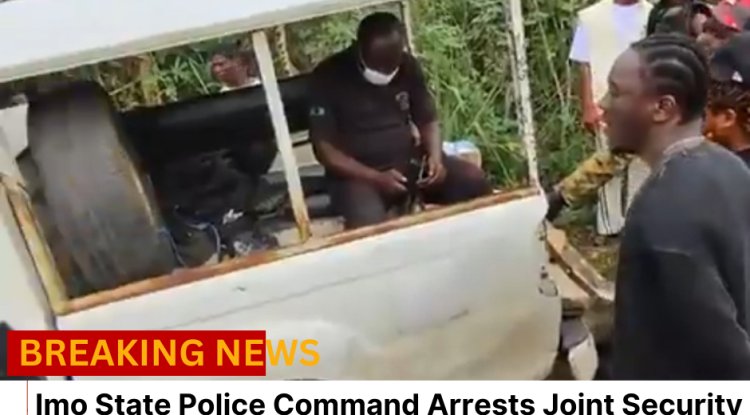
The footage, which spread rapidly across social media platforms, showed disturbing scenes of security operatives subjecting travellers to invasive searches and demands for money. In one clip, an officer inside a patrol van is seen rifling through the mobile phones of young motorists, even accessing their banking apps, a practice explicitly condemned as illegal by the Inspector-General of Police, Kayode Egbetokun.
Another segment captured an operative confiscating a traveller’s laptop during a document check, raising questions about the legal boundaries of such operations. Perhaps most damning was an audio recording where one officer was heard asking a colleague, “You don confirm the money?” implying confirmation of extorted funds.
Eyewitness accounts and the whistleblower who shared the video described the junction as a notorious spot where “criminals in uniform” operate. Young people, in particular, were singled out, with officers allegedly forcing transfers or cash payments to avoid prolonged detention or further harassment. The video sparked widespread condemnation online, with citizens decrying the involvement of soldiers and other agencies in what has traditionally been associated primarily with police misconduct.
This latest incident at Seven and Half Junction and nearby Amanze Junction in Obowo LGA underscores the dangers faced by ordinary Nigerians on the roads, especially youths travelling through rural or highway areas.
Police Response and Commitment to Reform
The Imo State Police Command acted promptly, announcing the arrests on December 13, 2025. ASP Henry Okoye emphasized the command’s zero-tolerance policy for unprofessional conduct. “The personnel involved in the Joint Security Patrol at Obowo, as seen in the viral video, have all been arrested and are currently in detention,” he stated. He assured the public that the investigation would be thorough and transparent. (Lindaijejiblog)
This action aligns with broader efforts by the current Commissioner of Police, CP Aboki Danjuma, to sanitize operations within the state. Earlier in 2025, CP Danjuma personally toured checkpoints across major highways, leading to the arrest of seven police officers for similar infractions like extortion and phone searches. The command has also issued directives banning unlawful phone inspections, prolonged detentions without cause, and the use of unmarked vehicles for patrols—measures aimed at curbing disguised extortion rackets.
Nationally, the Nigeria Police Force has repeatedly warned against such practices, with the IGP labeling unauthorized phone searches as criminal. Yet, incidents persist, often involving joint operations where accountability becomes blurred across agencies.
The Broader Context: Extortion at Checkpoints in Nigeria
Extortion by security operatives at checkpoints is a deeply entrenched issue in Nigeria, particularly on highways connecting major cities. Motorists, especially commercial drivers and private vehicle owners, frequently report being forced to pay “settlement” fees ranging from small amounts to thousands of naira. In more egregious cases, officers demand access to phones or banking details, leading to forced transfers.
According to Nigerian Eye, In Imo State, this problem has been exacerbated by the deployment of joint task forces to combat insecurity, including kidnapping and armed robbery along routes like the Owerri-Onitsha and Owerri-Port Harcourt expressways. While these operations are intended to enhance security, they sometimes devolve into opportunities for abuse.
Similar cases have made headlines in recent years. In June 2025, seven Imo police officers were arrested during a checkpoint inspection tour. Earlier incidents involved multi-agency personnel extorting over N1 million from victims through forced transfers. Across the country, viral videos have led to arrests in states like Bayelsa, Anambra, and Ebonyi, but critics argue that punishments are often insufficient deterrents.
Human rights organizations and civil society groups have long called for systemic reforms, including better training, improved welfare for officers (to reduce the incentive for “roadside hustling”), and the installation of body cameras or dashboard cams at checkpoints. Public complaints mechanisms, like the Police Complaint Response Unit, have been promoted, but many victims fear reprisals or doubt their effectiveness.
The involvement of non-police agencies, such as the Army and NSCDC, complicates matters further, as disciplinary processes vary. In this Obowo case, the decision to hand over suspects to their parent agencies reflects standard procedure but raises questions about uniformity in sanctions.
Public Reaction and Calls for Accountability
The viral video elicited strong reactions from Nigerians online, with many praising the police for the quick arrests while others expressed skepticism about lasting change. “It’s good they’re arrested, but will they really face justice, or just a slap on the wrist?” one commenter noted. Others highlighted the fear instilled in youths travelling through the area, with some avoiding certain routes altogether.
Advocates for police reform see this as a positive step but urge sustained action. The power of social media in exposing such abuses cannot be overstated without the viral footage, the incident might have gone unreported.
READ MORE ON : Tragic Ambush in Imo: Police Inspector Slain, Two Wounded in Separatist Strike
Looking Ahead: Towards a More Professional Security Apparatus
The arrests in Obowo represent a glimmer of hope in the fight against corruption within Nigeria’s security forces. Under CP Danjuma’s leadership, Imo State appears committed to rebuilding public trust through proactive measures like surprise inspections and public engagements.
However, eradicating checkpoint extortion requires more than isolated arrests. It demands comprehensive reforms: adequate funding and welfare for personnel, stricter oversight of joint operations, and a cultural shift towards rights-respecting policing.
As investigations continue into the Seven and Half Junction incident, Nigerians will be watching closely. Will the implicated operatives face meaningful consequences? And will this lead to safer roads for motorists in Imo State and beyond?
For now, the Imo Police Command’s decisive action sends a clear message: misconduct will not be tolerated. Citizens are encouraged to report similar incidents confidentially, empowering the public to hold security agencies accountable.
This development reminds us that while challenges persist, accountability driven by public vigilance and institutional resolve can pave the way for change.
What's Your Reaction?