President Bola Tinubu Nominates General Christopher Gwabin Musa as the New Minister of Defence
President Bola Tinubu nominates General Christopher Gwabin Musa, former Chief of Defence Staff and veteran counter-insurgency commander, as Nigeria’s new Minister of Defence.
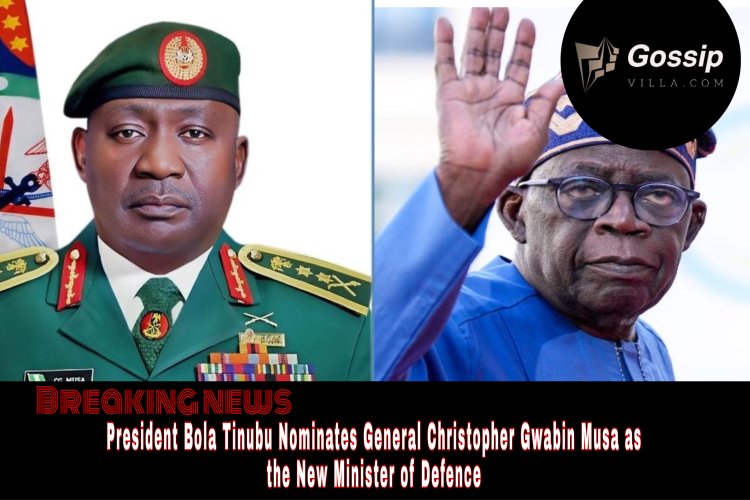
President Bola Tinubu Nominates General Christopher Gwabin Musa as the New Minister of Defence
In a significant move that underscores President Bola Ahmed Tinubu’s commitment to bolstering Nigeria’s security apparatus, the Nigerian leader has nominated General Christopher Gwabin Musa as the new Minister of Defence. This announcement, made on December 2, 2025, comes at a critical juncture for the nation, which continues to grapple with multifaceted security challenges including insurgency, banditry, and communal conflicts. The nomination has been forwarded to the Senate for confirmation, signaling a potential shift in the leadership of one of the country’s most pivotal ministries.
President Tinubu, who assumed office in May 2023 following a contentious election, has made security a cornerstone of his administration’s agenda. His “Renewed Hope” manifesto emphasized the need for a robust defence strategy to combat terrorism, secure borders, and foster national unity. In the past two years, Tinubu has undertaken several reforms within the military and security sectors, including the appointment of new service chiefs and investments in modern equipment. However, persistent issues such as the Boko Haram insurgency in the northeast, farmer-herder clashes in the Middle Belt, and rising kidnapping incidents across the country have tested these efforts. The resignation of the previous Minister of Defence, Alhaji Mohammed Badaru Abubakar, on December 1, 2025, citing health concerns, created a vacuum that Tinubu moved swiftly to fill.
Badaru, a former governor of Jigawa State, had served as Minister of Defence since August 2023. His tenure was marked by initiatives aimed at enhancing military welfare and international collaborations, but critics argued that progress was slow in addressing root causes of insecurity. President Tinubu accepted Badaru’s resignation immediately, paving the way for General Musa’s nomination. In his letter to Senate President Godswill Akpabio, Tinubu expressed unwavering confidence in Musa’s capabilities, stating that the general’s extensive experience would “further strengthen Nigeria’s security architecture.” (State house Government)
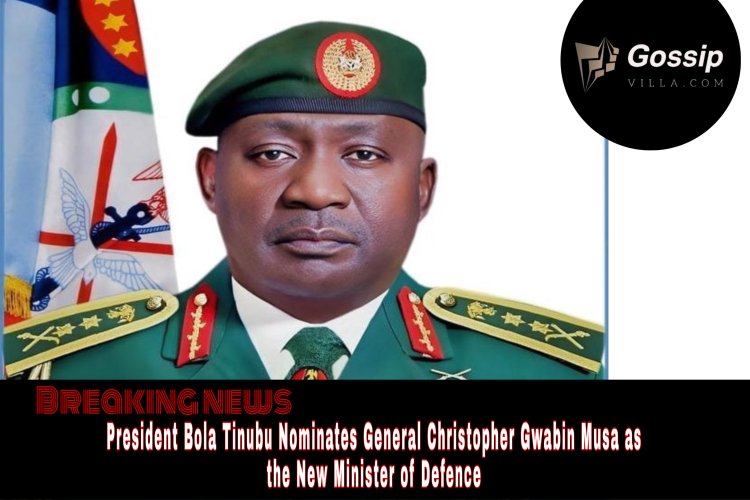
General Christopher Gwabin Musa, born on December 25, 1967, in Sokoto State, is a seasoned military officer with a distinguished career spanning over three decades. Though born in Sokoto, Musa hails from Zangon Kataf in Kaduna State, a region that has itself been plagued by ethno-religious tensions. He received his early education in Sokoto before attending the College of Advanced Studies in Zaria, graduating in 1986. That same year, he enrolled in the Nigerian Defence Academy (NDA), where he earned a Bachelor of Science degree in 1991. Commissioned as a Second Lieutenant in the Nigerian Army that year, Musa’s trajectory was one of rapid ascent and notable achievements.
According to prnigeria, Musa held several key positions that honed his expertise in operations, training, and strategic planning. Early roles included serving as General Staff Officer 1 for Training and Operations at Headquarters 81 Division, Commanding Officer of the 73 Battalion, and Assistant Director of Operational Requirements at the Department of Army Policy and Plans. He also represented the Infantry as a member of the Training Team at Headquarters Nigerian Army Armour Corps. These positions built a foundation in tactical and administrative leadership.
Musa’s prominence grew in the late 2010s and early 2020s, particularly in the fight against insurgency. In 2019, he was appointed Deputy Chief of Staff for Training and Operations at Headquarters Infantry Centre and Corps. He then commanded Sector 3 of Operation Lafiya Dole, the military campaign against Boko Haram, and later Sector 3 of the Multinational Joint Task Force in the Lake Chad Region. These roles placed him at the forefront of regional counter-terrorism efforts, collaborating with forces from Chad, Cameroon, and Niger.
In 2021, Musa was elevated to Theatre Commander of Operation Hadin Kai, the successor to Lafiya Dole, where he oversaw operations in the northeast. His leadership was credited with significant gains, including the surrender of thousands of insurgents and the recapture of key territories. Later, he served as Commander of the Nigerian Army Infantry Corps before President Tinubu appointed him as the 18th Chief of Defence Staff (CDS) in June 2023. As CDS, Musa coordinated the armed forces’ response to national security threats until his relief from the position in October 2025. Among his accolades is the prestigious Colin Powell Award for Soldiering, received in 2012, which recognizes exemplary military service.
The nomination of General Musa as Minister of Defence is seen by many as a strategic choice. As a career soldier with hands-on experience in counter-insurgency, Musa brings a level of operational insight that civilian predecessors may have lacked. Analysts suggest this could lead to more effective policy implementation, particularly in areas like intelligence sharing, troop motivation, and technological integration. For instance, during his time as CDS, Musa advocated for community engagement and non-kinetic approaches to complement military actions, such as deradicalization programs for former insurgents.
However, challenges abound. Nigeria’s defence budget, while substantial, faces scrutiny over efficiency and corruption allegations. Musa’s military background might help in streamlining procurement and reducing leakages, but he will need to navigate the political landscape, including relations with the National Assembly and international partners like the United States and the United Kingdom. Moreover, as a Christian from the Middle Belt, his appointment could be interpreted as an effort to balance regional and religious representation in Tinubu’s cabinet, which has faced criticism for perceived southern and Muslim dominance.
Public reactions to the nomination have been largely positive, with many praising Musa’s track record. On social media platforms like X (formerly Twitter), users have expressed optimism. One post highlighted Musa’s “patriotic journey” and his potential to bring “fresh energy” to the ministry. Another commended the choice, noting his experience in the northeast as crucial for ongoing operations. However, some voices caution that without broader economic reforms to address poverty and unemployment root causes of insecurity the impact might be limited. Opposition figures have yet to issue formal statements, but early indications suggest the Senate confirmation process could be smooth, given Musa’s non-partisan military profile.
If confirmed, General Musa will assume office amid pressing issues.
The resurgence of banditry in the northwest, oil theft in the Niger Delta, and separatist agitations in the southeast demand innovative strategies. His familiarity with multinational collaborations could enhance Nigeria’s role in regional security, such as through the Lake Chad Basin Commission. Furthermore, with global threats like climate-induced conflicts and cyber warfare on the rise, Musa’s leadership might steer the ministry toward modernization, including investments in drones, AI-driven surveillance, and cybersecurity.
READ MORE ON : President Tinubu Declares Nationwide Security Emergency
In conclusion, President Tinubu’s nomination of General Christopher Gwabin Musa represents a bold step toward professionalizing Nigeria’s defence leadership.
With his proven expertise and dedication, Musa has the potential to drive meaningful change in a sector vital to national stability. As the Senate deliberates, Nigerians will watch closely, hopeful that this appointment marks a turning point in the fight against insecurity.
The coming months will test whether this military veteran can translate battlefield successes into policy triumphs, ultimately contributing to a safer, more unified Nigeria.
What's Your Reaction?