USA to Impose Visa Bans on Perpetrators of Violence in Nigeria: A Bold Step Against Religious Persecution
The United States has announced visa bans on individuals and their families responsible for anti-Christian violence in Nigeria. Secretary Marco Rubio targets perpetrators of religious persecution, Fulani militia leaders, and those enabling Boko Haram-style attacks in 2025. A major escalation in U.S. policy against Nigeria’s ongoing crisis.
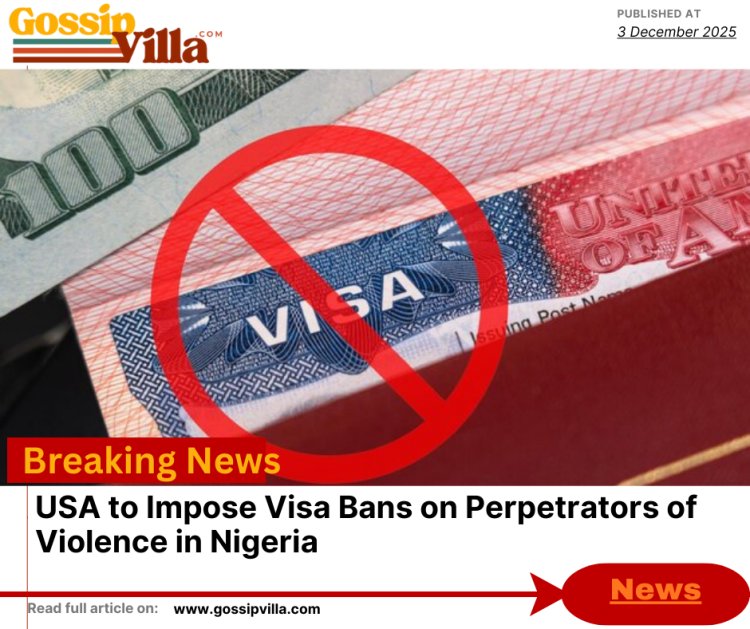
USA to Impose Visa Bans on Perpetrators of Violence in Nigeria: A Bold Step Against Religious Persecution
In a significant escalation of its commitment to global religious freedom, the United States Department of State announced on December 3, 2025, a new policy imposing visa restrictions on individuals and entities responsible for violence against Christians and other religious minorities in Nigeria. This measure, articulated by Secretary of State Marco Rubio, targets those who “direct, authorize, significantly support, participate in, or carry out violations of religious freedom,” extending bans to immediate family members where appropriate.
The announcement comes amid mounting international outcry over what has been described as a “genocide” against Nigerian Christians, perpetrated by radical Islamic terrorists, Fulani militias, and other violent actors. As Nigeria grapples with intertwined crises of insecurity, ethnic tensions, and resource competition, this U.S. action signals a zero-tolerance stance on impunity, potentially reshaping bilateral relations and deterrence strategies in Africa’s most populous nation.
The policy draws from Section 212(a)(3)(C) of the Immigration and Nationality Act, a legal framework long used to curb threats to U.S. security and values. Rubio’s statement on X (formerly Twitter) emphasized that the U.S. “cannot stand by while such atrocities are happening,” echoing President Donald Trump’s recent directive to the Pentagon for contingency planning on potential military involvement.
This is not merely diplomatic rhetoric; it’s a targeted instrument of foreign policy designed to isolate perpetrators and compel accountability. For Nigeria, where over 220 million people are roughly evenly divided between Christians and Muslims, the implications are profound, touching on everything from elite travel privileges to grassroots security dynamics.
The Escalating Crisis: A Pattern of Persecution
Nigeria’s religious violence is no isolated phenomenon but a festering wound exacerbated by weak governance, porous borders, and socioeconomic disparities. The northern and central regions, particularly the Middle Belt, have borne the brunt of attacks since the early 2000s. Boko Haram, the Islamist insurgency that pledged allegiance to ISIS in 2015, has killed thousands, displacing millions and enforcing a brutal interpretation of Sharia law in captured territories. More insidiously, Fulani herdsmen, nomadic Muslim cattle breeders have been accused of systematic raids on Christian farming communities, often framed as farmer-herder clashes but increasingly viewed through the lens of jihadist expansion.
According to Punch News, over 52,000 Christians have been killed in Nigeria since 2009, with 2024 alone seeing more than 8,000 deaths in faith-related violence. A joint hearing in Washington last week, hosted by U.S. House Republicans, featured testimonies from survivors and experts who rejected the “routine clashes” narrative. Instead, they highlighted patterns: selective targeting of churches, villages with Christian majorities, and clergy; the use of AK-47s and sophisticated weaponry by militants; and a disturbing lack of prosecutions, with fewer than 1% of cases reaching conviction.
One harrowing example is the Christmas Eve 2023 massacre in Plateau State, where gunmen slaughtered over 140 people in predominantly Christian communities. Survivors recounted how attackers shouted “Allahu Akbar” while burning homes and hacking victims with machetes. Similar atrocities unfolded in Benue State earlier this year, where Fulani militias razed 17 villages, killing dozens and destroying crops in what rights groups called an “ethnic cleansing” operation. These incidents are not spontaneous; intelligence reports suggest coordination with transnational networks, including funding from sympathetic donors in the Sahel region. (Legit.ng)
The Nigerian government’s response has been criticized as inadequate. Despite President Bola Tinubu’s approval of a U.S.-Nigeria Joint Working Group on security formed after high-level talks in Washington led by National Security Adviser Nuhu Ribadu critics argue that rhetoric outpaces action.
The military’s Operation Safe Haven has made strides against Boko Haram, but Fulani-linked violence often goes unchecked, with allegations of complicity or bias within security forces. Human Rights Watch documented over 200 cases in 2024 where police dismissed complaints from Christian victims as “land disputes,” allowing perpetrators to evade justice. This impunity cycle has fueled radicalization, with youth in affected areas joining militias out of desperation or revenge.
Details of the U.S. Visa Ban Policy
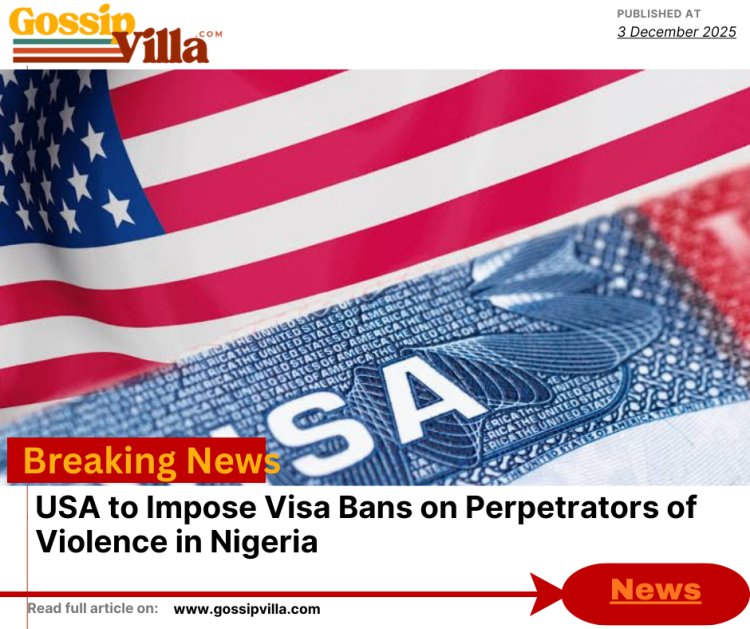
At its core, the visa ban is a precision tool in America’s arsenal against human rights abuses. Invoking Section 212(a)(3)(C), the State Department can deny B-1/B-2 visitor visas, student visas, and even green card applications to those deemed threats to U.S. interests, including religious freedom violators. Rubio specified that the policy applies broadly: to “governments or individuals” in Nigeria and beyond, with immediate family members potentially included to prevent evasion.
Who stands to be affected? Early indications point to high-profile figures and groups. The Miyetti Allah Cattle Breeders Association (MACBAN), a powerful Fulani advocacy organization, tops the list. U.S. legislation proposed in November 2024 urged sanctions against MACBAN leaders for allegedly inciting or covering up anti-Christian violence. Other targets include Boko Haram commanders, mid-level officials accused of funding militias, and even some state governors in northern Nigeria where Sharia enforcement has led to blasphemy executions. A “list emerges,” as one report put it, circulating in diplomatic circles, naming over 50 individuals based on open-source intelligence and NGO dossiers.
This isn’t the U.S.‘s first rodeo with Nigeria. In 2023, visa bans hit officials undermining elections, and in 2021, similar restrictions targeted human traffickers. The current policy, however, is more expansive, aligning with Trump’s “America First” doctrine that prioritizes protecting persecuted allies. It also complements the U.S. Commission on International Religious Freedom’s (USCIRF) annual designation of Nigeria as a “Country of Particular Concern” since 2020, alongside nations like Iran and China.
Implementation will involve interagency coordination: the State Department for visa decisions, Treasury for potential asset freezes, and intelligence sharing with Nigerian counterparts via the new Joint Working Group. While exact names remain classified to avoid diplomatic fallout, the message is clear: cross the line, and America’s borders and global networks close to you.
Broader Implications for Nigeria and U.S.-Africa Relations
For Nigerian perpetrators, the bans could be devastating. Many elites rely on U.S. visas for medical tourism, education for children, and business dealings. A barred official might see family scholarships revoked or investment deals stalled, creating personal incentives for restraint. On a societal level, this could disrupt militia financing; remittances from diaspora sympathizers might dry up if travel is curtailed.
Yet, the policy risks backlash. Nigerian officials have decried it as “interference,” with Foreign Minister Yusuf Tuggar warning of strained ties during a press conference in Abuja. Civil society groups like the Christian Association of Nigeria (CAN) hail it as “long-overdue justice,” but Muslim leaders, including the Sultan of Sokoto, argue it unfairly stigmatizes Fulani communities, many of whom are victims of counter-violence. Economically, Nigeria’s $500 billion oil-dependent economy could feel ripples if bans extend to business visas, deterring foreign investment amid already fragile post-COVID recovery.
Geopolitically, this move underscores a shift in U.S. Africa policy under Trump 2.0: from broad counterterrorism partnerships to selective pressure on human rights. It may embolden allies like the UK and EU, which have issued similar advisories, but could push Nigeria toward China or Russia for security aid nations less squeamish about religious dynamics. The Pentagon’s planning for “potential military action,” as Trump stated last month, adds urgency, though experts doubt boots-on-the-ground feasibility given U.S. overstretch in Ukraine and the Middle East.
Read more on: U.S. Revokes Visas of 80,000 Nigerians and Other Foreign Nationals
A Call for Accountability and Hope
The U.S. visa bans represent more than punitive measures; they are a clarion call for Nigeria to confront its demons. True progress demands domestic reforms: bolstering community policing, reforming land tenure to resolve herder-farmer disputes, and investing in deradicalization programs. International partners must support these efforts without alienating the government perhaps through targeted aid for victim rehabilitation and intelligence tech transfers.
As Rubio noted, religious freedom is a “fundamental freedom” integral to U.S. foreign policy. For the thousands of Nigerian families shattered by violence, this policy offers a glimmer of hope: that the world is watching, and impunity has an expiration date. In a nation as vibrant and resilient as Nigeria, accountability could yet forge a path to peace, where faith unites rather than divides.
What's Your Reaction?