Meta Buys Limitless: What This Big Move Says About the Future of AI Wearables
Meta acquires AI wearable startup Limitless, signaling a shift from Metaverse to smart devices that record, summarize, and manage daily conversations.
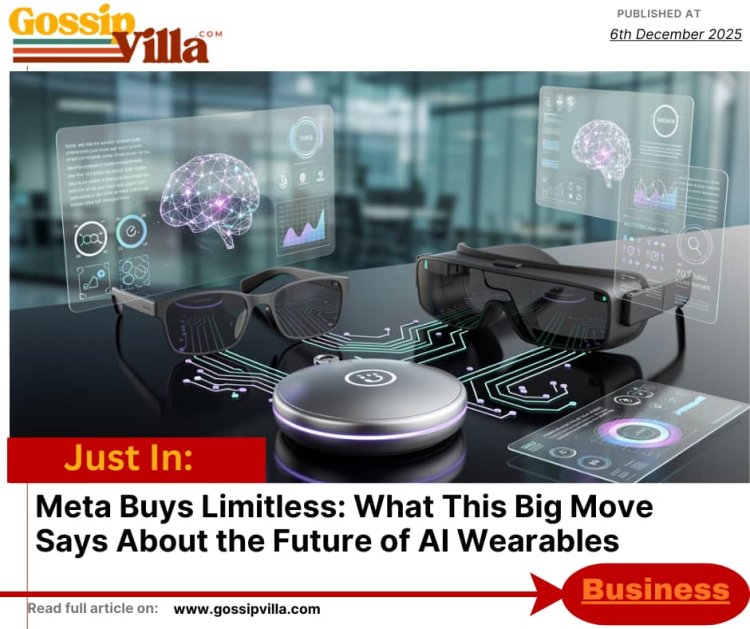
Meta has made another major move in the fast-growing world of artificial intelligence by acquiring Limitless, the startup behind a controversial yet powerful AI pendant that records, transcribes, and summarises real-world conversations. The deal, first reported by Reuters, is already raising big questions about where the future of wearable technology is heading and what Meta truly wants to build next.
For a company that once pushed the Metaverse as the “next era of the internet,” Meta’s recent decisions show a sharp change in direction. Instead of spending heavily on virtual worlds and bulky VR headsets, the company is now turning toward lighter, more practical, more personal AI devices. Analysts told Financial Times that this acquisition signals a deeper shift in Meta’s long-term hardware strategy. The company now wants to bring AI closer to people’s everyday lives — not just inside apps, but on their bodies, quietly assisting them throughout the day.
Limitless, formerly known as Rewind, earned attention for building a tiny pendant that people could clip to their clothing. The device was simple but powerful: it listened to your conversations, recorded them, and used AI to turn everything into clean, organised summaries. Meetings, casual chats, interviews, brainstorming sessions, even things you say to yourself the device captured all of it. Users could later search for keywords, pull up exact conversations, or generate summaries of entire days. It became popular among busy professionals, founders, executives, creators, and anyone who attends long meetings and needs clean notes without doing the work manually.
But the same technology that made the device useful also made it controversial. People worried that wearing an always-listening pendant would raise serious issues around privacy and consent. Many asked: How do people around you know when they’re being recorded? What if sensitive information is captured accidentally? How secure is the stored data? These questions followed Limitless from the very beginning and they are not going away just because Meta is now in control.
The acquisition immediately changes Limitless’ future. Shortly after the deal was confirmed, Limitless announced it would stop selling new pendant devices. The company also said that existing customers would continue to receive support for one year. Subscription fees were removed, and a new “Unlimited Plan” was rolled out for current users, giving them free access for the remaining period. After that, the device’s future becomes uncertain. Most industry observers believe Meta is not interested in continuing the pendant as a standalone product. Instead, the technology and team will likely be integrated into Meta’s broader plans for AI wearables.
This is where the bigger story begins.
Meta has been quietly shifting away from the Metaverse for months. The company reduced spending, slowed its VR development, and redirected resources toward AI especially wearable AI. Products like Meta’s smart glasses already allow users to speak to an onboard assistant, take hands-free photos, and receive real-time information. But these glasses are still limited. They do not record and summarise conversations. They do not automatically generate memory logs or meeting notes. They don’t help you track what you said earlier in the day or remind you of what someone else told you last week.
Limitless gives Meta the missing piece.
With the startup’s technology, Meta can build a stronger ecosystem of AI hardware that blends smoothly into everyday life. Imagine smart glasses that can summarise your meetings automatically. Imagine earbuds that silently transcribe conversations. Imagine a wearable that remembers everything for you conversations, ideas, commitments, reminders, discussions and lets you search your life like a digital archive.
This is exactly the direction the tech world has been moving toward, and Meta clearly does not want to be left behind.
For consumers, especially in regions like Nigeria and other African countries, the impact could be significant when these products eventually reach the market. Imagine students who can replay class discussions, journalists who can instantly summarise interviews, entrepreneurs who can track brainstorming sessions, and professionals who can pull up past meeting highlights with a single search. AI wearables have the potential to make work faster, learning easier, and communication more organised.
But the concerns cannot be ignored. Always-on microphones will raise debates around consent. Recording laws differ from country to country. People will worry about how data is stored and who has access to it. Security researchers will question whether Meta can be trusted with such sensitive information, especially given its long history with privacy controversies.
The company will need to convince users that data captured by these devices is safe, encrypted, and not used for ad-targeting or algorithm training. Without strong privacy safeguards, public backlash could grow just like what happened when smart glasses with cameras first entered the market.
Still, one thing is clear: Meta’s acquisition of Limitless shows that AI wearables are about to move from experimental gadgets to mainstream tools. The company is preparing for a world where AI lives closer to the body where devices become companions that support memory, productivity, communication, and daily routines.
It also signals the beginning of a larger shift within the tech industry. Companies are now investing heavily in practical AI simple devices that solve real problems rather than flashy technologies that feel distant or unrealistic. Wearable AI is the perfect middle ground: easy to use, helpful, and powerful.
As Meta absorbs Limitless into its growing AI ecosystem, the race for the future of wearable intelligence is heating up. Tech giants want to own the next generation of consumer devices not just smartphones, but the AI tools people wear every day.
READ MORE ON HOW Australia Bans Under-16s From Social Media: What This Means for Global Online Safety
Whether this future becomes widely accepted or heavily resisted will depend on how these companies handle privacy, transparency, and the human side of AI. For now, one thing is certain: what Meta is building could redefine how we remember, how we communicate, and how we manage our lives.
What's Your Reaction?