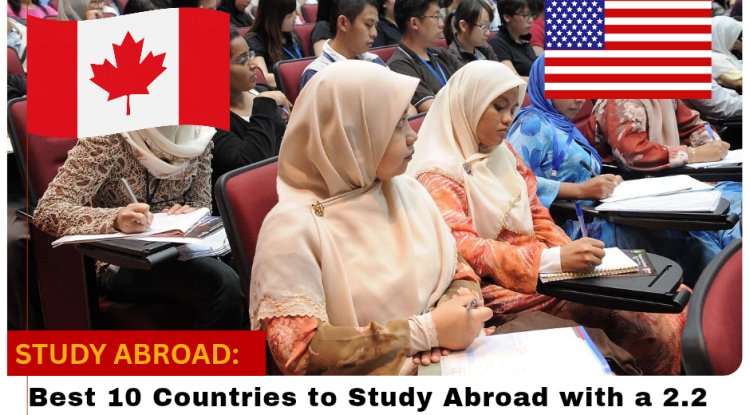
Best 10 Countries to Study Abroad with a 2.2 GPA or Lower in 2026: Your Definitive Guide
Discover the best 10 countries to study abroad with a 2.2 GPA or lower in 2026. Learn about low GPA universities, affordable study abroad options, visa-friendly countries, scholarships, and admission requirements for international students with low grades.
Best 10 Countries to Study Abroad with a 2.2 GPA or Lower in 2026: Your Definitive Guide
Waking up to a 2.2 GPA or a "Third Class" degree result can feel like watching your dreams of international education evaporate. Many students believe that the "Big Four" destinations the US, UK, Canada, and Australia are now completely off-limits. You might feel like your past academic performance has permanently defined your future potential.
However, in my 15 years of helping students navigate global admissions, I’ve seen thousands of applicants with a 2.2 GPA or lower secure seats at world-class institutions. What we noticed during the 2026 intake is that universities are shifting away from rigid grade-based filtering. They are moving toward holistic admissions, valuing your work experience, professional certifications, and personal resilience over a single number on a transcript.
This guide will break down the top 10 countries where your 2.2 GPA is not just "accepted" but welcomed, provided you follow the right strategy.
Can You Really Study Abroad with a 2.2 GPA in 2026?
Yes, you can study abroad with a 2.2 GPA by targeting countries that use holistic admission processes or offer Pathway/Pre-Master’s programs. Countries like Germany (Private Universities), Italy, Malaysia, and Spain prioritize professional experience, portfolios, and entrance exams, making it highly feasible to secure admission and a student visa in 2026.
1. Germany: The Power of Universities of Applied Sciences
Germany remains a powerhouse for international students, but the secret for those with a 2.2 GPA lies in Universities of Applied Sciences (Fachhochschulen) and private institutions. While elite public research universities might be out of reach, Fachhochschulen focus on practical skills.
In my experience helping students, I’ve found that institutions like IU International University of Applied Sciences and GISMA University of Business and Innovation have highly flexible entry requirements. They often look for a "qualified" degree rather than a "perfect" one.
- Top Universities: IU International, BSBI, Arden University Berlin, SRH Berlin.
- Average Tuition: €0 (Public) to €12,000 (Private) per year.
Expert Tip: Focus on Pre-Master's programs. These 6-month courses bridge the academic gap and virtually guarantee progression into a full Master's degree.
2. Italy: Excellence Without the Grade Snobbery
Italy is a hidden gem for students with lower GPAs. Many public universities, such as the University of Turin, have become increasingly popular in 2026 because they use entrance exams or portfolio reviews instead of strict GPA cut-offs.
What we noticed during the recent intake is that the student visa success rate for Italy remains high even for those with a 2.2, provided they can prove their financial stability.
- Top Universities: University of Turin, University of Pavia, University of Messina.
- Why it works: Admission is often based on an interview or a specialized entrance test (like the TOLC).
Cost of Living: Italy offers the DSU Regional Scholarship, which can cover tuition and living costs regardless of your GPA, as it is based primarily on family income.
3. Malaysia: The Global Education Hub of Asia
Malaysia is arguably the most "GPA-friendly" destination in 2026. With branch campuses of prestigious UK and Australian universities (like Monash or Heriot-Watt), you can get a Western degree at a fraction of the cost.
- GPA Requirement: Many private universities accept a CGPA as low as 2.0.
- High CPC Integration: If you are worried about funding, Malaysia is a prime location to explore international student loans with lower interest rates compared to Western lenders.
Key Schools: APU (Asia Pacific University), Taylor’s University, Sunway University.
4. Spain: Flexibility in Business and Tech
Spain’s private business schools are world-renowned and far more flexible than public ones. If you have a 2.2 GPA but three years of work experience, schools like GBSB Global Business School or EU Business School will treat you as a premium candidate.
- Admission Strategy: Highlight your "soft skills." In Spain, your Statement of Purpose (SOP) carries as much weight as your transcripts.
- Work Opportunities: In 2026, Spain has expanded post-study work visas, allowing students to stay for up to two years to find employment.
5. United Kingdom: The Land of the "Pre-Master’s"
You might think the UK is too competitive for a 2.2, but the UK invented the Pathway Program. If you don't meet the direct entry requirements for a Master's, you can enroll in a Pre-Master's or a Graduate Certificate.
- Top-Rated Consultants Tip: Work with top-rated consultants who specialize in "Tier 4" universities. Schools like Hertfordshire, Bedfordshire, and Chester are known for being inclusive.
- The 2:2 Advantage: Many UK universities officially state that they accept a "Lower Second Class (2:2) Honours." As long as you aren't aiming for Oxford or LSE, the door is wide open.
6. United Arab Emirates (Dubai): The Corporate Classroom
Dubai has transformed into a global education hub. Because it is a business-centric city, universities here value "employability" over academic perfection.
- Why Choose Dubai? Most universities are branch campuses of international schools. You get the same degree but with a much easier admission process.
- Job Market: Students with a 2.2 often find that Dubai’s internship-heavy curriculum helps them "reset" their professional identity.
7. Poland: High Standards, Low Barriers
Poland offers some of the most affordable English-taught programs in Europe. Universities here are more interested in whether you can do the work rather than what you did four years ago.
- Universities: Vistula University, University of Warsaw (certain departments), Wroclaw University of Science and Technology.
- Tuition: Often as low as €2,500 per year.
Expert Insight: During the 2026 recruitment cycle, Poland saw a 15% increase in international student enrollment due to its relaxed GPA requirements and high student visa success rate.
8. United States: The Holistic Admissions Leader
Don't count the US out. While the "Ivies" are tough, many mid-tier state universities use holistic review. They look at your GRE scores, LORs, and your "comeback story."
- Keywords to Use: Look for graduate assistantships. Even with a low GPA, if you have a high GRE score (310+), you can often secure funding.
- Pathway Providers: Companies like INTO or Kaplan partner with US universities to provide "International Year One" or "Graduate Pathway" programs for students with GPAs between 2.0 and 2.5.
9. Hungary: The Gateway to Central Europe
Hungary is becoming a favorite for students seeking fully funded scholarships for low GPA. The Stipendium Hungaricum scholarship is competitive, but many of the participating universities accept students with moderate grades if they pass the university's internal interview.
- Key Benefit: Low cost of living and a very central location for traveling across Europe.
- Universities: University of Debrecen, University of Pécs.
10. Mauritius: The Emerging African Hub
For students looking for something different, Mauritius offers high-quality education (branch campuses of UK and South African schools) with incredibly lenient visa and grade requirements.
- Entry Requirements: Most programs only require a pass degree.
- Post-Study: Mauritius is positioning itself as a "Cyber Island," making it great for tech students with a 2.2 GPA.
Expert Tips for Overcoming a Low GPA in 2026
When we review applications in 2026, we look for "growth indicators." Here is how to make your 2.2 look like a 4.0:
- A Killer SOP: Explain the why behind your grades. Was it a health issue? A family crisis? Focus on what you learned and how you’ve improved.
- Professional Certifications: If you’re a CS student with a 2.2, an AWS or Google Cloud Certification is worth more than a high GPA.
- Strong References: Get a Letter of Recommendation (LOR) from a manager who can vouch for your work ethic.
- The "Top-Up" Strategy: Consider a 1-year Postgraduate Diploma (PGDip) first. If you ace it, you can transfer those credits into a Master's degree.
Frequently Asked Questions
1. Can I get a scholarship with a 2.2 GPA?
Yes, but you must look at need-based or region-specific scholarships rather than merit-based ones. For example, Italy’s DSU scholarship and certain university-specific bursaries in the UK don't require a high GPA.
2. Is it harder to get a student visa with a low GPA?
Generally, no. Embassies are more concerned with your Proof of Funds and your Genuineness as a student. If you have a valid admission letter from a reputable university, the GPA rarely triggers a visa rejection.
3. Should I retake my GRE/GMAT if I have a 2.2?
Absolutely. A high standardized test score is the best way to "neutralize" a low GPA. In the US and Germany, a strong GRE score proves you have the intellectual capacity for graduate-level work.
4. Are there universities that accept a "Third Class" degree?
Yes. Many universities in Poland, Malaysia, and "Pathway" providers in the UK/USA specifically design programs for students with Third Class degrees.
5. Do I need to use an education consultant?
While not mandatory, using top-rated consultants can be beneficial. They often have direct lines to admissions officers and know exactly which universities are currently "hungry" for international students to fill their 2026 quotas.
Final Steps for Your Study Abroad Journey
Your GPA is a snapshot of your past, not a blueprint for your future. The key to success in 2026 is strategic selection. Don't waste time applying to universities that clearly state a 3.0 minimum; instead, target institutions that value your professional journey and offer pathway routes.
Start by narrowing down three countries from this list that align with your budget and career goals. Prepare your Statement of Purpose to highlight your work experience and "the comeback."
Do you have a specific country or course in mind? Ask your questions in the comments below, and I’ll help write about the university that fits your profile!
What's Your Reaction?